Content:
SHARE:


Subscribe and don't miss anything important
Don't worry, we don't spam 😍
This case study breaks down how we transformed a traditional U.S. retailer of high-ticket doors and windows from a lead-gen-only business into a profit-driven e-commerce powerhouse, achieving a 6.47 ROAS within just 120 days.
Client’s Story
Our client is a specialized U.S. retailer selling premium home improvement products, including high-ticket doors and windows ranging from $1,000 to $5,000. Historically, the brand operated as a traditional “brick-and-click” model where the website served only to generate phone calls.
Initial Request
Our team was tasked with a complete digital pivot: transforming the business from a lead-generation model into a fully functioning, direct-to-consumer (DTC) e-commerce store. The goal was to shift customer behavior from “calling to ask” to “clicking to buy” while maintaining high-profit margins on Meta Ads.
Challenges we faced
Selling $5,000 doors online is a massive hurdle. Before our intervention, the brand relied entirely on manual sales via phone calls and form submissions.
- Zero Funnel Structure: Meta Ads were running without retargeting or segmentation.
- Algorithm Mismanagement: Meta’s “autopilot” was dumping budget into older Facebook-only placements, neglecting higher-intent Instagram audiences.
- High Friction: Potential buyers dropped off due to confusion over delivery zones and uncertainty about product dimensions.
- Low Trust: High-ticket items require multiple touchpoints; the brand lacked a system to nurture users through that journey.
The Growth Method
Strategic Analysis & High-Intent Quick Wins
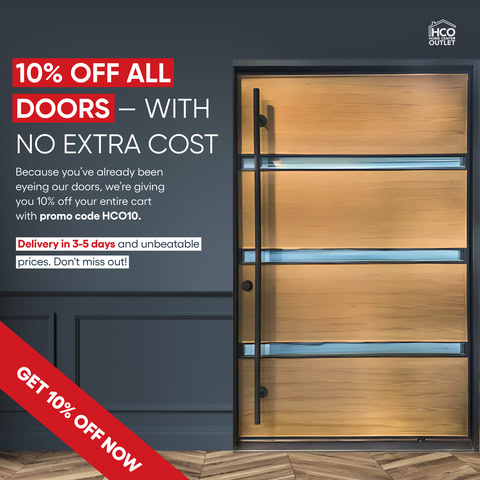
We began by identifying the lowest-hanging fruit: the “warm” traffic that was leaking out of the funnel. We immediately activated a retargeting layer for website visitors and users who had initiated calls but hadn’t purchased. To shift the needle toward e-commerce, we introduced a “Buy Online & Save 10%” offer, giving customers a tangible reason to skip the phone call and head straight to checkout.
Identifying and Eliminating Purchase Barriers
Through GA4 analysis and call-center feedback, we identified two major conversion killers. We didn’t just change the ads; we changed the messaging strategy:
- Delivery Uncertainty: We deployed creatives that explicitly mapped out delivery timelines, zones, and fees.
- Sizing Anxiety: We introduced “Measure Your Door” guides and education-based creatives to answer the “Will it fit?” question before the user could bounce.
Leveraging Segmentation for Scalable ROAS
The data showed that while the brand was targeting the whole U.S., profitability was concentrated in just five states. We tightened the geo-fencing and isolated our best-performing demographic (ages 45+) into standalone campaigns. Simultaneously, we broke out Instagram-only prospecting to feed the top of the funnel with fresh, high-CTR traffic that Meta’s automated settings were previously ignoring.
Building a 3-Step Retargeting Funnel
Our data indicated that high-ticket home goods require approximately seven touchpoints to convert. We built a structured narrative to follow the user:
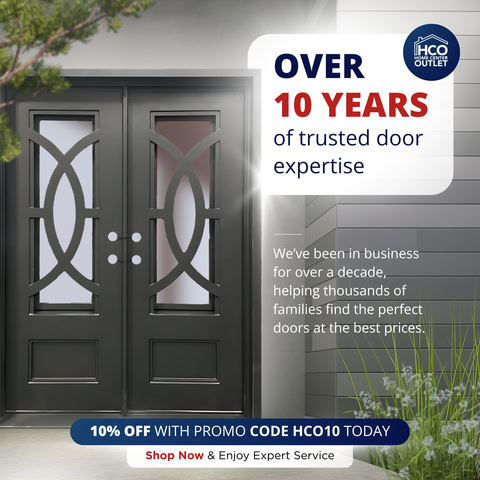
- Phase 1 (Education): Showcase product value, trust signals, and delivery transparency.
- Phase 2 (The Hook): A 10% discount triggered for engaged users who hadn’t purchased.
- Phase 3 (The Closer): An exclusive “Last Call” 15% offer for high-intent users (those with multiple visits or items left in the cart).
The Roadblock
As we scaled, we hit a natural ceiling. Despite the new online sales, many users were still tethered to the old “call-to-buy” habit. Meta’s algorithm also began pushing budget back into broader, less profitable demographics to spend the increased daily budget. We realized that scaling spend wasn’t enough; we had to strengthen our creative “barrier-fixes” to force the algorithm to find the right buyers.
The Fix: Creative Strategy Overhaul
We moved away from static catalog images and introduced a “Full-Funnel Creative” approach:
- Problem-Solving Videos: Direct answers to sizing and installation fears.
- UGC Walkthroughs: Real customers showing the quality of the doors in their homes to build trust.
- Angle-Based Testing: Rotating “Best-Seller” compilations against educational visuals to see what drove the highest intent.

Scaling Results
By stabilizing the account structure and focusing on “barrier-fix” creatives, we were able to aggressively scale budgets in high-performing states and the 45+ age segment without the ROAS collapsing.
Early results
- Phase 1: Within the first two months, we moved the needle from a struggling lead-gen setup to a consistent e-commerce engine, stabilizing ROAS above 4.0.
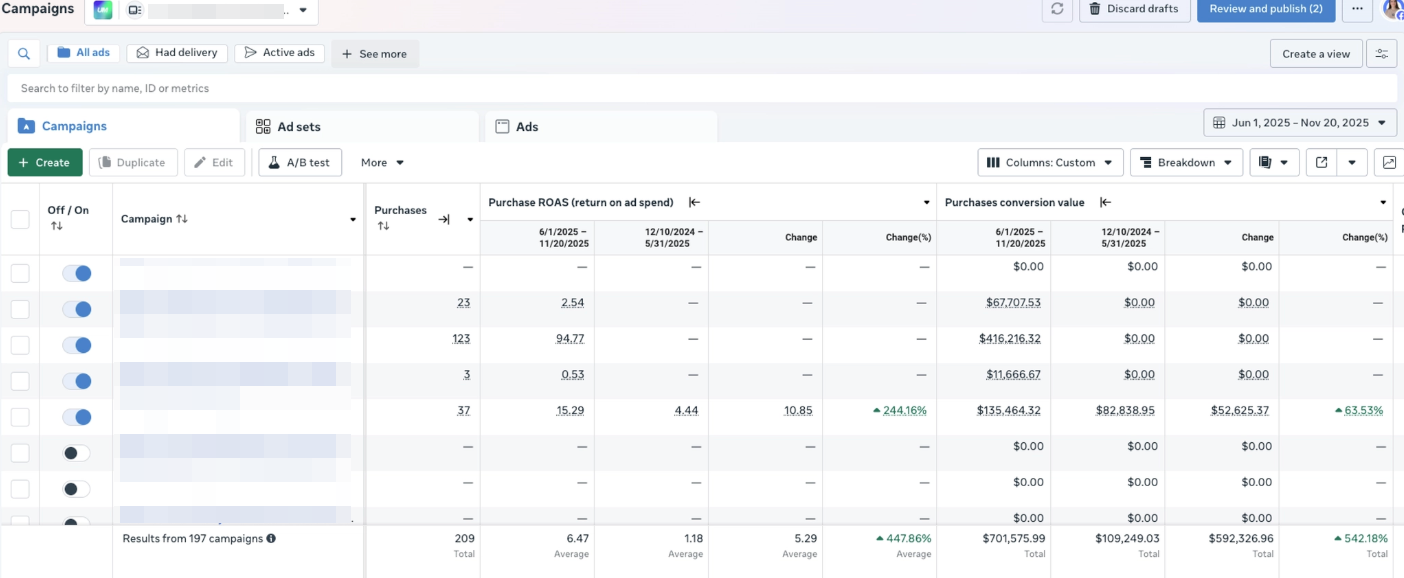
- Phase 2: By month four, the optimized funnel allowed for a 542% increase in total purchase value compared to the starting period.
Total Results
Looking at the four-month window, the transformation of our client proves that high-ticket items can be sold effectively through a structured Meta ecosystem if the barriers to entry are addressed head-on.
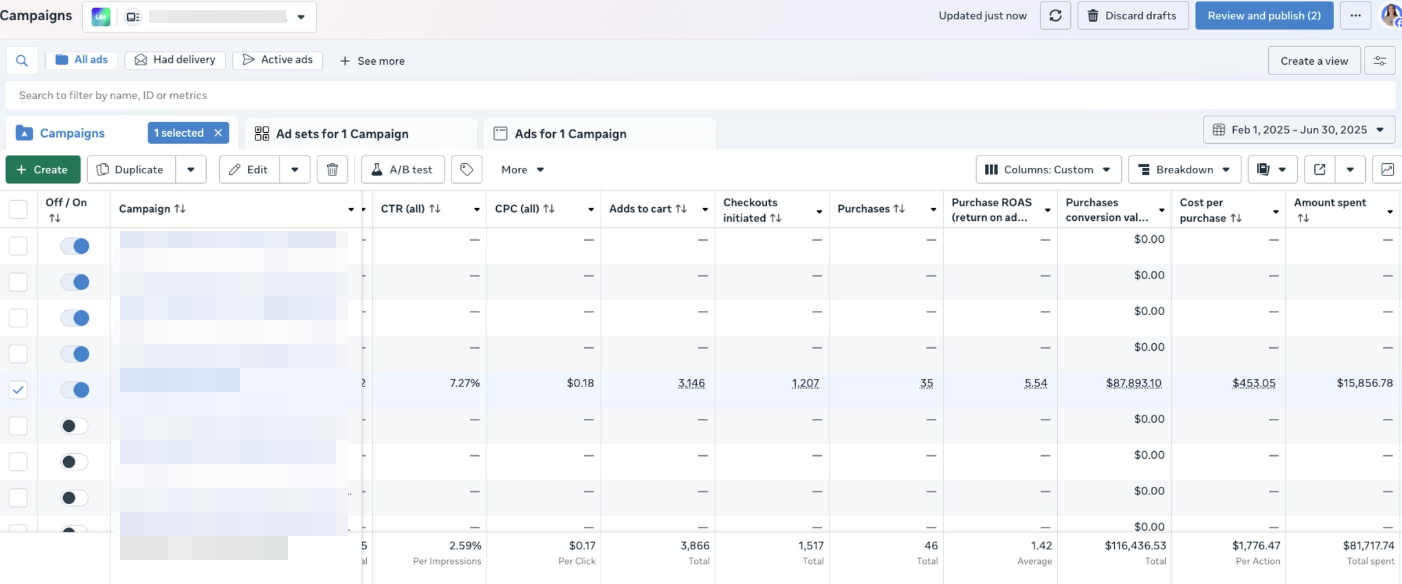
On Meta Ads, total performance reached a 6.47 ROAS, generating over $700,000 in revenue. This represents a 447% improvement in efficiency from the initial 1.18 ROAS.
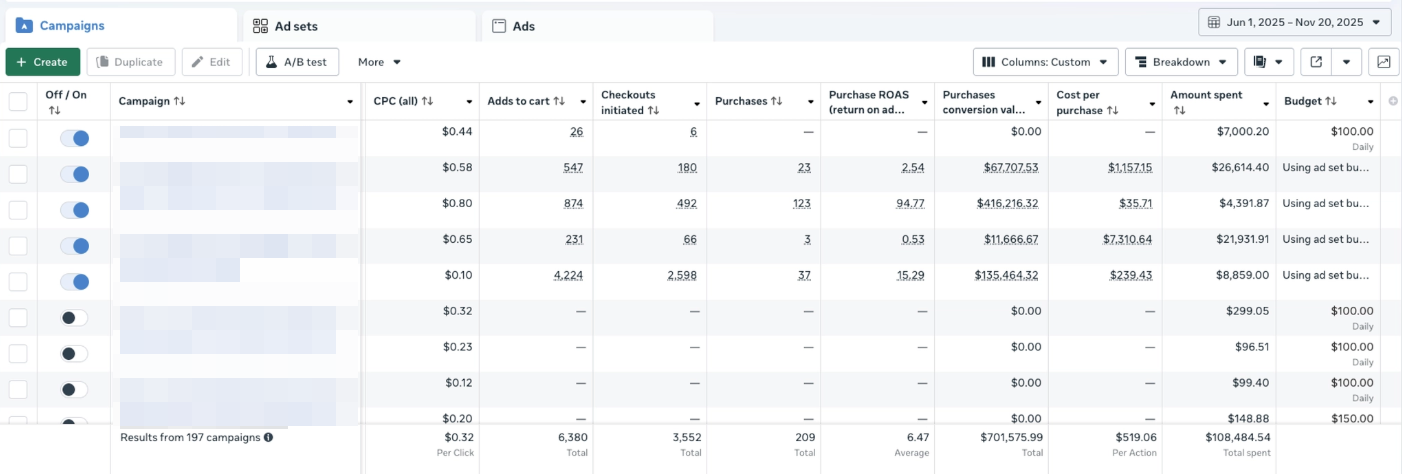
These results weren’t just the result of “better ads,” but a total system-level alignment of audience segmentation, psychological barrier-breaking, and a sophisticated 3-layer retargeting funnel.
Looking to transition your high-ticket brand to a high-ROAS e-commerce model? Let’s discuss how we can build a similar growth system for you.