Content:
SHARE:


Subscribe and don't miss anything important
Don't worry, we don't spam 😍
This case study breaks down how we helped a long-established U.S. personalized party goods brand stop recycling its own demand — and build a scalable acquisition engine that grew revenue by 36% in just two months.
Client’s Story
Our client has been in the business of making celebrations memorable since 2011. The brand offers a premium assortment of personalized party goods — custom cups, napkins, invitations, and curated event accessories — designed for weddings, milestone parties, and branded corporate events.
It’s a boutique-meets-production business: high design standards, deep customization, and a loyal customer base that keeps coming back. By the time they approached us, the brand was well-established. The question wasn’t whether the product worked — it was whether paid acquisition was working hard enough.
Initial Request
The account already had Google Ads running with two active campaigns. But performance was inconsistent, and there was no clear growth trajectory. The client knew the channel had more to give — they just needed a team that could actually unlock it.
The goals were straightforward:
- Increase revenue from paid acquisition
- Build a scalable growth system through Google Ads
- Move beyond basic campaign management toward a real performance strategy
Challenges We Faced
36,000 Products. One Messy Feed.
The Google Merchant Center account contained nearly 36,000 SKUs — a direct result of the brand’s highly customizable product catalog, where each variant and configuration lives as its own listing. Before we could build anything scalable on the Shopping side, we had to go deep: historical performance analysis, feed reconstruction, title optimization across thousands of products, and filling in missing attributes to align everything with high-intent search behavior. It was unglamorous work, but it was the foundation on which everything else depended.
Strong Numbers. Wrong Source.
At first glance, the account looked healthy. ROAS was respectable, revenue was coming in. But when we pulled back the curtain, most of that revenue was flowing from branded search and repeat customers — people who already knew the brand and were going to buy anyway.
New customer acquisition — the only real engine of scalable growth — was almost entirely absent. The account was surviving on existing demand, not building new demand.
A Long Decision-Making Window
Personalized event goods aren’t impulse purchases. Customers planning a wedding or a corporate event are often browsing weeks or months before they buy. This longer conversion cycle makes short-term optimization misleading and demands a more thoughtful approach to attribution — one that doesn’t punish campaigns for doing their job early in the funnel. The Tracking Problem Nobody Had Fixed
During the initial audit, we found a critical issue: purchase events were being recorded twice. Every reported conversion was doubled, which meant the account’s actual efficiency was roughly half of what the data showed. Before scaling a single dollar, this had to be fixed. You can’t build a growth system on a broken foundation.
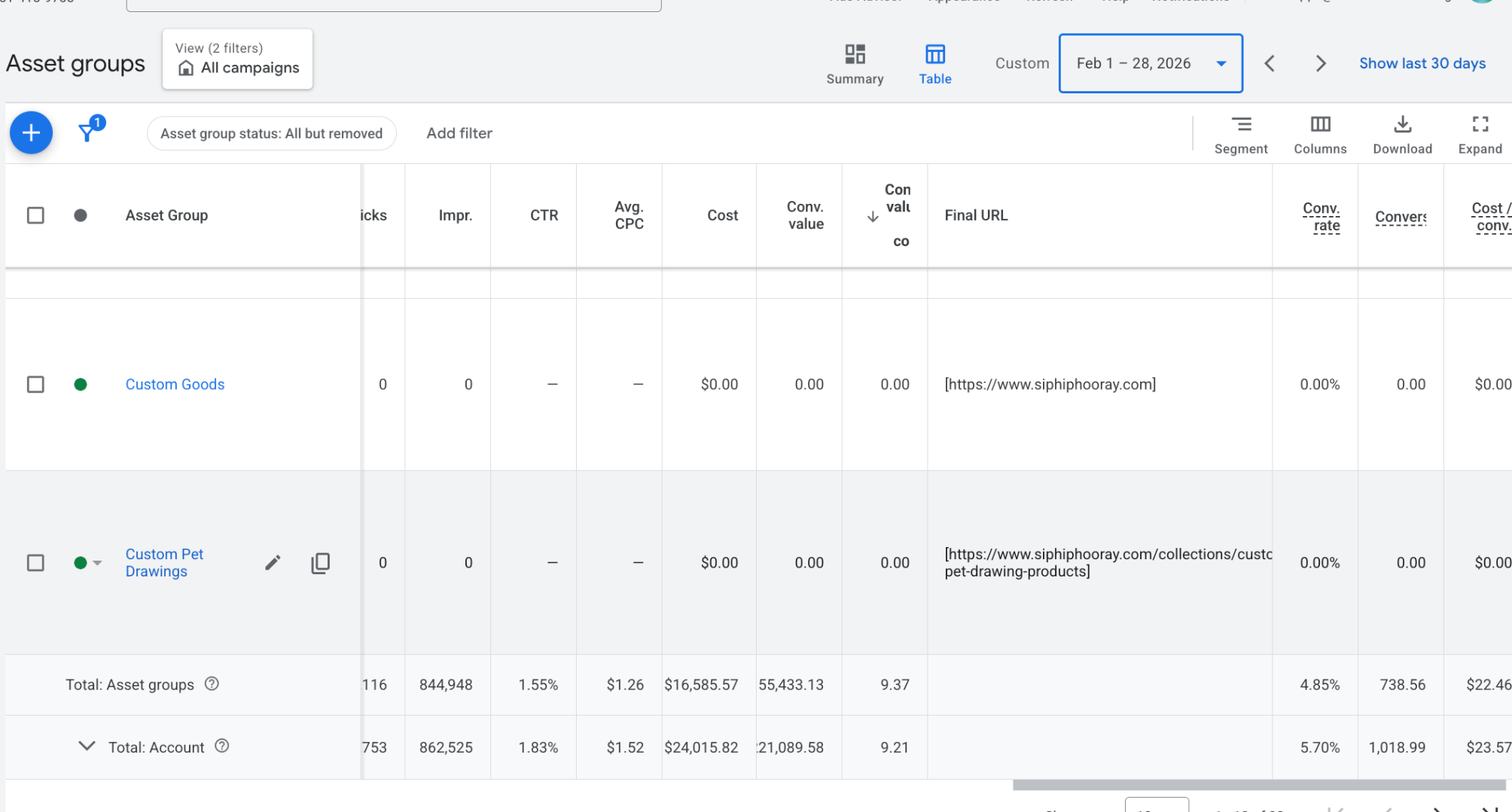
Google Ads – Before
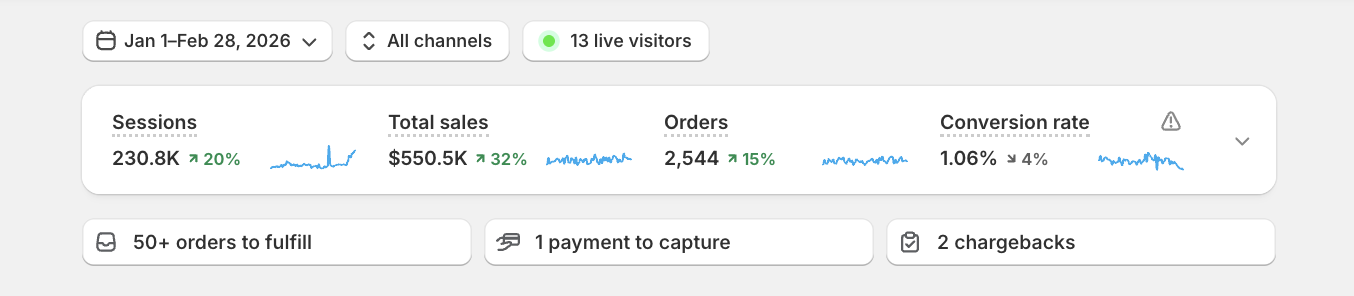
Store Performance – Before
The Growth Method
After the audit, two growth levers became clear: shift from brand-dependent traffic toward scalable cold acquisition, and rebuild the account structure to handle both high-intent Search and a 36,000-SKU Shopping ecosystem.
1. Shopping Restructure via PMax Segmentation
Rather than pushing the entire catalog into a single Performance Max campaign and hoping for the best, we analyzed historical data to identify the SKUs actually driving revenue. From there, we launched segmented PMax campaigns focused on best-sellers and high-potential product groups. The result: budget concentrated on what worked, cleaner signals for the algorithm, and no dilution from low-impact products.
2. High-Intent Search by Category
A deep keyword and search-term analysis revealed the non-branded queries with the highest commercial intent. We built dedicated Search campaigns for each key product category — giving us full budget control, clear performance visibility per category, and tighter alignment between what users were searching for and where they landed.
3. Hard Brand Exclusion Across All New Campaigns
Every new campaign ran with branded terms fully excluded. This wasn’t a minor setting — it was a deliberate architectural decision. By separating brand traffic from cold acquisition entirely, we could measure true incremental performance, eliminate overlap with returning users, and ensure that what we were scaling was actually net-new growth.
The Results
The structural overhaul didn’t just improve efficiency — it drove a meaningful step-change in business performance.
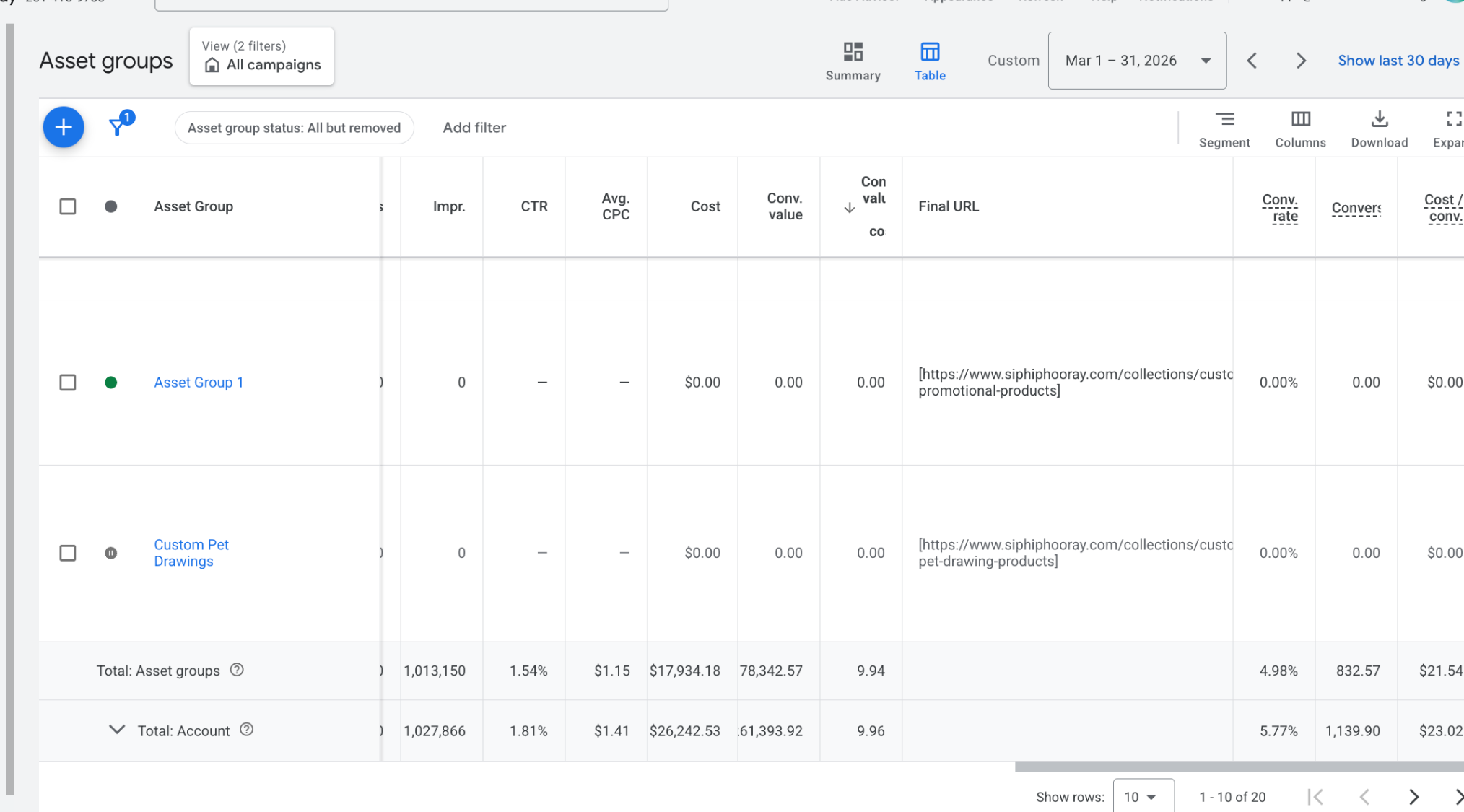
Google Ads – After
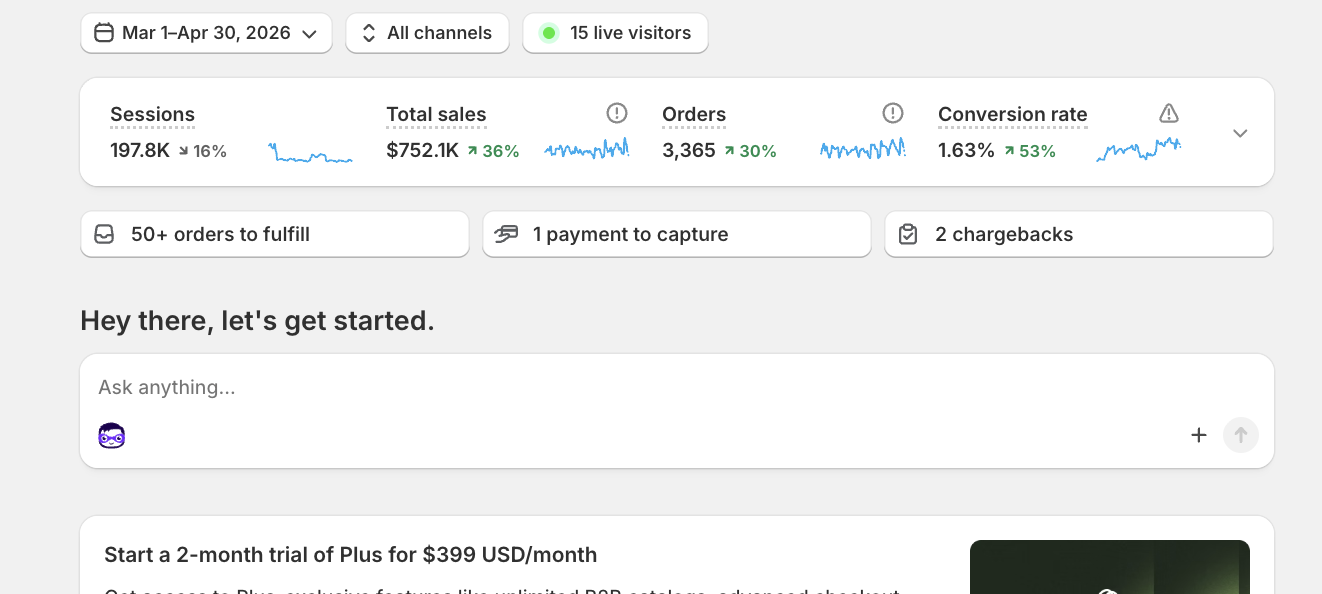
Store Performance – After
Revenue & Store Performance
- Revenue jumped from ~$550,500 (Jan–Feb) to ~$752,000 (Mar–Apr) — a 36% increase
- Orders grew by ~30%
- Conversion rate improved by ~53%
- All of this happened despite a ~16% drop in traffic, meaning the quality of visitors improved significantly
Account Transformation
- Duplicate purchase tracking fixed — establishing an accurate performance baseline for the first time
- Branded traffic dependency has been eliminated in favor of a scalable cold acquisition model
- 36,000+ product feed restructured into performance-driven segments
- Budget reallocated to best-selling and high-intent categories
Stability & ROAS
- Maintained a strong ROAS of ~9.2–9.9 throughout the full account restructuring
- Campaigns now operate with clear segmentation and budget control
- The account is positioned for long-term scaling with predictable acquisition economics
Running Google Ads on a large-catalog store and not sure if you’re growing or just recycling your own demand? Let’s find out — and build a system that actually scales.