Content:
SHARE:


Subscribe and don't miss anything important
Don't worry, we don't spam 😍
Launching a Shopify store is the easy part. The real headache? Turning that beautiful storefront into a predictable revenue machine without burning months on “best practices” that don’t actually move the needle.
Most CMOs and founders we work with know Shopify SEO is vital. But they’re often paralyzed by the when and the how. That uncertainty usually leads to one of two things: decision paralysis or a rushed, messy execution that creates technical debt you’ll be paying off for years.
The goal isn’t just to rank; it’s to build an organic engine that supports your paid ads and email marketing rather than competing with them for attention. Here is how to get the sequence right.
Why Most New Stores Spin Their Wheels
New stores don’t usually struggle because of a lack of effort—they struggle because everything feels like a “Priority 1.” Technical fixes, blog posts, product tags, and backlinks all get thrown into one giant bucket.
Before you touch a single meta tag, you need to pressure-test your foundation.
The Strategy Audit: Questions to Ask Before Scaling.
Think of this as a diagnostic, not just another SEO checklist:
The Revenue Lens
Which 3-5 collections are going to pay the bills in the next 6 months? SEO needs a business target, not just a keyword list.
The “Why” Behind the Search
Are people searching to learn, or searching to buy? If you optimize for curiosity instead of intent, your traffic won’t convert.
The Architecture
Is your site easy to navigate, or are your collections a maze? Fixing a bad URL structure six months from now is a nightmare—get it right today.
The Data
If you can’t see how SEO is helping your paid social or email flows, it will always be the first budget to get cut.
Days 1–30: Build the Foundation
The first month isn’t about checking Google Analytics every five minutes. It’s about removing the friction that stops Google from understanding your site.
The Focus:
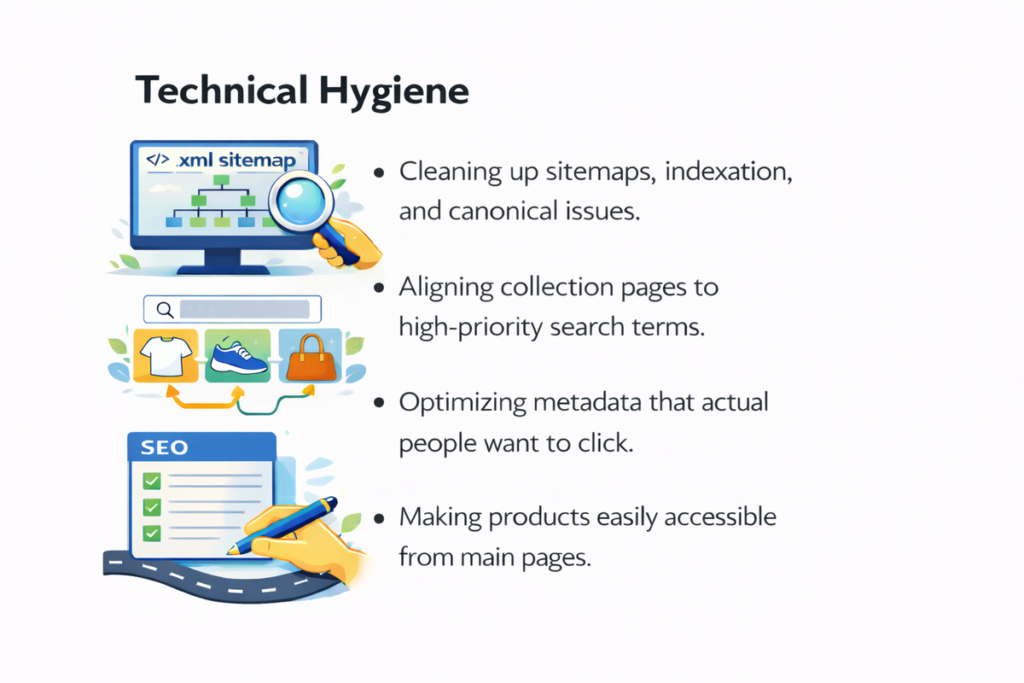
- Technical Hygiene: Cleaning up sitemaps, indexation, and those pesky canonical issues.
- Core Structure: Aligning your collection pages with high-priority search terms.
- Human-First Metadata: Writing descriptions that actual people want to click, not just keyword-stuffed templates.
- Internal Wiring: Making sure your best products are easily accessible from your main pages.
The Reality: In month one, the best SEO isn’t “more content”—it’s making sure the store you already built is actually readable.
Days 31–60: Capture the Demand
This is the phase where many teams finally understand how to improve SEO on Shopify beyond surface-level optimizations. Once the foundation is solid, it’s time to start catching the people who are already looking for you.
The Focus:
- Deep-Diving Collections: Making your category pages more helpful and authoritative.
- Answering Questions: Creating content that addresses the specific hurdles your customers face before they buy.
- Automation: Adjusting your Shopify templates so that every new product you add automatically inherits SEO value.

Days 61–90: Scale What’s Actually Working
By month three, the data starts talking to you. You’ll see which collections are bubbling up and which blog posts are actually assisting sales.
The Focus:
- Doubling Down: Building “content clusters” around the categories that are already showing signs of life.
- Authority Building: Earning links and mentions to your most important pages.
- Cross-Channel Synergy: Using your SEO data to inform your Google Ads and email subject lines.
Growth Without the Chaos
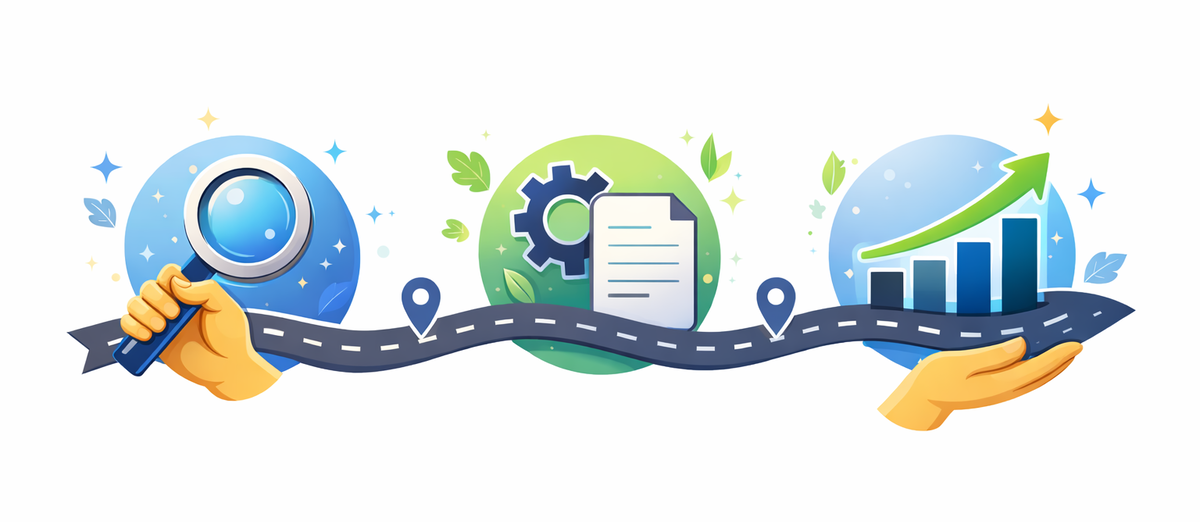
A 90-day roadmap isn’t a set of golden rules, it’s a sequence. A sustainable Shopify SEO strategy prioritizes timing and leverage – fixing structural issues first, then capturing existing demand, and only scaling once the data proves what’s working. By treating SEO as a long-term system rather than a frantic checklist, you avoid the “start-over” cycle that kills so many brands.
When you align your organic search with your performance marketing early on, growth stops feeling like a gamble and starts feeling like a system.